
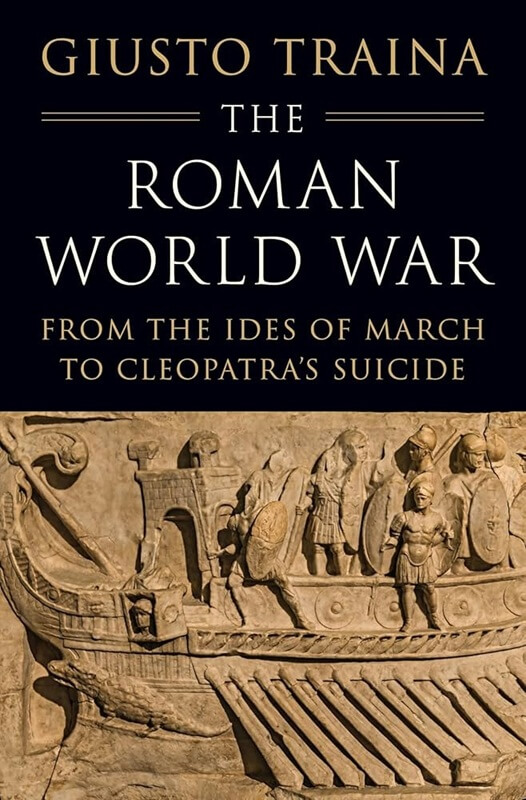
“The corpse was lying where Caesar fell, covered ignominiously in the blood of the man who had marched as far west as Britain and the Ocean and who was planning to march east against the realms of the Parthians and Indians so that, when they were subjugated, sovereignty over all…

I came to Joseph Joubert fairly recently, the kind of encounter that makes you wonder immediately why it took so long. He is not a companion of decades. What he brought is still warm from the finding, and I want to set it down before it settles into anything more…
Featured Content
Amongst the strange bedfellows of history, a most unique relationship occurred in the immediate lead up to the rise of Adolf Hitler and…

The flies buzz above the decaying hands, Whose subtle fingers once etched the republic’s last defense. The noble head, with pin pierced tongue,…

Have you ever felt paralysed, heartbroken, or caught wagering with the devil himself? If so, you may relate to Johann Wolfgang von Goethe’s…

In 2005, Moroccan author Laila Lalami published her first novel, Hope and Other Dangerous Pursuits, in the United States. In the months that…

If there is one movie that could successfully be converted into a play, “The Brink of War” is it. The film opens the…

The modern world has become difficult to understand on its own terms. Since 2008, Western institutions have drifted into symbolic governance, managerial abstraction,…
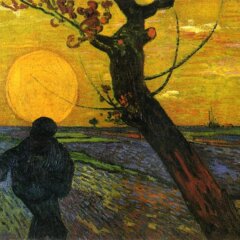
Tomorrow will worry about itself. – Matthew 6:34 It’s not worth worrying if worse is to come, And though it’s easier said…

After graduating as the most senior student in the history of her school, Elaine moved to Reno for more school. Ever since she…
A Review of Art, Culture, Politics, Science, and Divine Ground
VOEGELINVIEW is the online arts and humanities journal of the Eric Voegelin Society and is dedicated to humanistic renewal and learning in art, culture, and criticism. This journal exists to promote excellence in writing and thinking about politics, the humanities, and science. The journal is also devoted to the preservation and promotion of the life and work of our namesake, Eric Voegelin, who was a living embodiment of the interdisciplinary intellectual ethos that this journal honors. In the words of the Eric Voegelin Society, we exist as “an educational organization devoted to the revitalization of teaching and understanding of Eric Voegelin’s work and fundamental expressions of human civilization in art, literature, science, and politics.”
The Eric Voegelin Society publishes VOEGELINVIEW. The journal also has partnerships with Louisiana State University’s Eric Voegelin Institute and the Arizona State University Foundation. Potential contributors should consult our submissions guidelines and our policy on questions of copyright and publication for possible concerns and questions regarding to the content published here. VOEGELINVIEW welcomes unsolicited submissions on a rolling basis.
If you have questions, you can email our editor-in-chief, Paul Krause, at [email protected].
Announcements



Have you ever felt paralysed, heartbroken, or caught…

In 2005, Moroccan author Laila Lalami published her…

The question of social cohesion or cooperation has…


Now we’ve always been a happiness-oriented culture. “Life,…

The modern world has become difficult to understand…



Amongst the strange bedfellows of history, a most…

The transformation of political order in the modern…

Deuteronomic Reform: An Attempt at Institutional Restoration Political…
Hannah Arendt and Eric Voegelin are two of…

In The Australian, July 22-23, 2023, there was…
Introduction[1] The constitution of the Federal Republic of…
Have you ever felt paralysed, heartbroken, or caught…

Animated by a restless intellectual curiosity, the author…

Scrolling through LinkedIn recently feels like a bad…
Long before the publication of Magnifica Humanitas, many…






Mikhail Bulgakov’s The Master and Margarita is at…


The Eric Voegelin Society publishes VOEGELINVIEW. The journal also has partnerships with Louisiana State University’s Eric Voegelin Institute and the Arizona State University Foundation. The journal is supported by the Arizona State University Foundation. You can make a donation through the ASU Foundation VOEGELINVIEW Fund.
The Eric Voegelin Society is a 501(c)(3) organization (Tax ID 45-5508836).
You can also contact David Whitney at [email protected] for instructions of how to make a contribution to VOEGELINVIEW or the Eric Voegelin Society by check if that is your preferred method of donation.

What do Saint Augustine and Shakespeare’s King Lear…

Nature is an active participant in Christine Norvell’s…


The infamous anecdote regarding French television executive Patrick…


Representative democracy suffers from an inbuilt tension. On…
Jacques Rancière needs little introduction to those in…

Nature is an active participant in Christine Norvell’s…